Another factor that keeps the cringy vs cringey conversation alive is the influence of search behavior. People often type questions into search engines before choosing a spelling, especially when they are writing articles, social media captions, product reviews, or marketing content. Over the years, I have noticed that many writers are less concerned about which version is absolutely right and more interested in which one their audience expects to see. Because both spellings appear across websites, blogs, forums, and online communities, readers become familiar with each form. This familiarity reduces the sense that either spelling is unusual or incorrect.
The rise of internet-driven vocabulary has also changed how quickly words gain recognition. In the past, a new expression might take years to move from casual conversation into mainstream writing. Today, trends can spread across social media platforms within days. Words associated with humor, reactions, and online culture often experience especially rapid growth. The popularity of cringey and cringy follows that pattern. People encounter these terms in comment sections, memes, discussion threads, and video reactions, making them part of everyday communication. As exposure increases, spelling variations become easier to accept.
From a writing perspective, the most useful strategy is understanding your audience before making a choice. A formal publication may prefer a single style throughout an article, while casual online content may allow greater flexibility. In my experience, readers respond best when spelling remains consistent and the message stays clear. Whether a writer selects cringey or cringy, maintaining the same form across an entire piece helps create a polished impression. Consistency reduces distractions and allows readers to focus on the content itself.
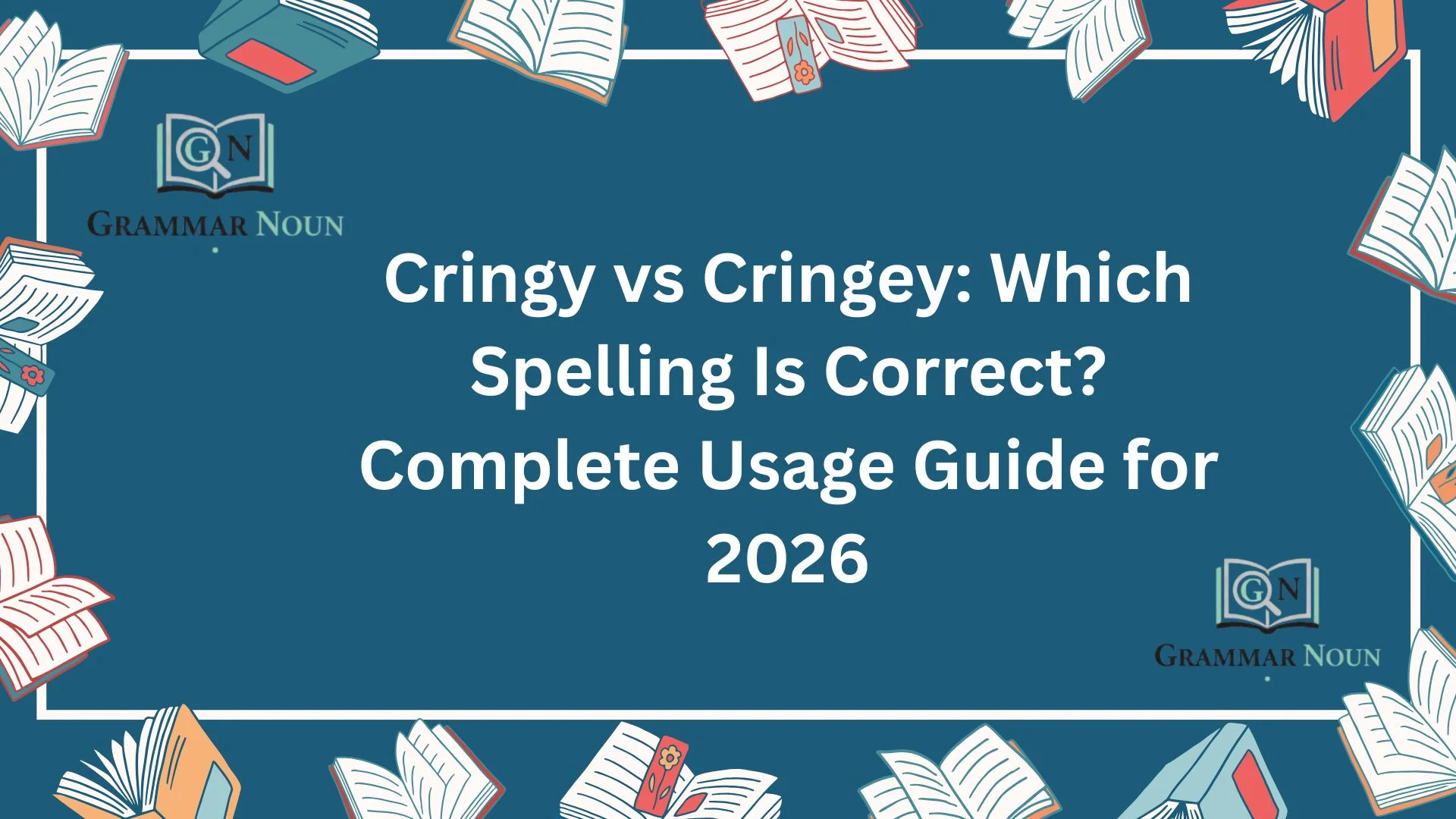
Cringy vs Cringey: The Quick Answer
Let’s start with the short answer.
Both cringy and cringey are correct.
Major dictionaries recognize both spellings.
However, usage patterns differ.
Many writers prefer cringey because it visually mirrors words like:
- Smokey
- Gooey
- Dicey
- Homey
Others prefer cringy because it follows a simpler spelling pattern.
Both words mean the same thing:
Something that causes embarrassment, discomfort, awkwardness, or secondhand embarrassment.
Quick Examples
Correct:
- That commercial was cringy.
- That commercial was cringey.
Correct:
- His speech felt cringy.
- His speech felt cringey.
In everyday English, readers understand both forms instantly.
Quick Comparison
| Feature | Cringy | Cringey |
| Dictionary recognition | Yes | Yes |
| Common online usage | High | Very high |
| Meaning | Same | Same |
| Informal writing | Common | Common |
| Social media usage | High | Very high |
| Formal writing | Rare | Rare |
The Simplest Rule
If consistency matters, pick one spelling and stick with it throughout your article, blog post, or publication.
What Does Cringy Mean?
The word cringy functions as an adjective.
It describes something that causes emotional discomfort, embarrassment, awkwardness, or secondhand humiliation.
Definition of Cringy
A simple definition looks like this:
Cringy means causing a feeling of embarrassment or discomfort strong enough to make someone mentally recoil.
The term comes from the verb cringe, which traditionally meant to shrink back, cower, or react with discomfort.
Common Situations People Describe as Cringy
Modern speakers apply the word to countless situations.
Examples include:
- Awkward speeches
- Forced jokes
- Embarrassing social media posts
- Overacting in movies
- Bad pickup lines
- Uncomfortable interviews
- Failed marketing campaigns
Example Sentences
- The influencer’s apology video felt cringy.
- His attempt to sound cool came across as cringy.
- The advertisement looked surprisingly cringy.
Why the Word Became Popular
The rise of digital culture created endless opportunities for public embarrassment.
Millions of people now share videos, opinions, and performances online every day.
Naturally, audiences needed a quick way to describe content that triggered secondhand embarrassment.
Cringy filled that role perfectly.
What Does Cringey Mean?
The spelling cringey carries the exact same meaning.
No meaningful difference exists between the definitions.
Definition of Cringey
Cringey describes:
- Awkward behavior
- Embarrassing actions
- Social discomfort
- Forced interactions
- Content that causes secondhand embarrassment
Why Some Writers Prefer Cringey
Many readers feel that cringey looks more natural.
English contains numerous adjectives ending in “-ey.”
Examples include:
- Dicey
- Gooey
- Homey
- Smokey
Because of those familiar patterns, some people instinctively gravitate toward cringey.
Example Sentences
- The actor’s performance felt cringey.
- That TikTok challenge seems cringey now.
- Their marketing campaign became unintentionally cringey.
Reader Perception
Interestingly, many younger internet users encounter cringey more often than cringy.
This exposure influences personal preference even when both forms remain acceptable.
Cringy vs Cringey: Is There Actually a Difference?
Many spelling debates involve subtle differences.
This isn’t one of them.
Same Meaning
Both words describe the same experience.
Whether someone writes cringy or cringey, readers understand:
- Embarrassment
- Awkwardness
- Discomfort
- Social unease
Same Function
Both serve as adjectives.
Examples:
| Word | Part of Speech |
| Cringy | Adjective |
| Cringey | Adjective |
Different Visual Preference
The main difference lies in appearance.
Some writers believe cringey looks more complete.
Others appreciate the simplicity of cringy.
The distinction resembles choosing between:
- Donut and doughnut
- Advisor and adviser
- Toward and towards
Meaning remains unchanged.
Practical Conclusion
Choose one spelling.
Remain consistent.
Your audience will understand either version.
The Origin of Cringe, Cringy, and Cringey
Every popular word has a story.
The history behind cringe stretches back much further than social media.
The Original Meaning of Cringe
Historically, cringe functioned as a verb.
Early English speakers used it to describe:
- Cowering in fear
- Shrinking back physically
- Displaying submission
- Reacting to danger
Examples from older literature often involve physical movement rather than emotional discomfort.
The Shift Toward Emotional Meaning
Language rarely stands still.
Over time, cringe evolved.
Writers began using it to describe emotional reactions.
Instead of physically shrinking, people mentally recoiled from embarrassment.
This subtle shift laid the foundation for modern usage.
Internet Culture Accelerated Change
The internet transformed the word completely.
Online communities embraced cringe as shorthand for:
- Awkward behavior
- Embarrassing content
- Failed attempts at humor
- Social discomfort
Suddenly, cringe became part of everyday conversation.
How Cringy and Cringey Emerged
Once people started using cringe more frequently, adjective forms naturally followed.
English speakers created:
- Cringy
- Cringey
Neither form developed through official language planning.
Instead, both emerged organically through widespread use.
That’s often how language evolves.
What Major Dictionaries Say About Cringy and Cringey
Dictionary recognition often settles spelling debates.
Fortunately, modern dictionaries acknowledge both forms.
Dictionary Acceptance
| Dictionary | Cringy | Cringey |
| Merriam-Webster | Yes | Yes |
| Collins | Yes | Yes |
| Dictionary.com | Yes | Yes |
| Various learner dictionaries | Often | Often |
What Dictionary Recognition Means
When dictionaries recognize a word, they acknowledge established usage.
That doesn’t necessarily mean editors prefer it.
However, it does confirm the spelling exists within accepted English.
Why Dictionaries Include Both
Lexicographers document how people actually use language.
If millions of speakers write both cringy and cringey, dictionaries reflect that reality.
They don’t choose winners.
They record usage.
Cringy vs Cringey in American English
American English embraces both spellings.
However, usage patterns reveal interesting trends.
Social Media Favors Cringey
Across platforms such as:
- TikTok
- X
- YouTube
Many users gravitate toward cringey.
The extra letter appears frequently in captions, comments, and memes.
Editorial Preferences Vary
Publishers don’t follow a universal rule.
Some style guides choose cringy.
Others choose cringey.
Many simply maintain consistency within individual publications.
Everyday Usage
Most Americans encounter both spellings regularly.
As a result, neither appears unusual.
Readers generally focus on meaning rather than spelling variation.
Cringy vs Cringey in British English
British English follows a similar pattern.
Both Forms Appear
Writers throughout the United Kingdom use:
- Cringy
- Cringey
Neither spelling dominates to the extent seen in classic British-American differences.
Informal Language Drives Usage
Because the term emerged primarily through informal communication, rigid spelling standards never fully developed.
That flexibility allows both forms to coexist comfortably.
Publishing Trends
Modern UK media outlets frequently use whichever spelling aligns with their editorial style guide.
Readers rarely object to either version.
Which Spelling Should You Use?
Now comes the practical question.
Which version should you choose?
For American Readers
Either spelling works.
However, many online audiences appear slightly more familiar with cringey.
For British Readers
Again, both remain acceptable.
Consistency matters more than the specific choice.
For International Audiences
Cringey often enjoys broader recognition due to social media exposure.
However, cringy remains perfectly understandable.
For Bloggers and Content Creators
Search engines understand both versions.
Many creators include both terms naturally throughout an article to capture broader search intent.
For Students
Academic writing generally avoids both words whenever possible.
More precise alternatives often work better:
- Embarrassing
- Awkward
- Inappropriate
- Uncomfortable
Quick Recommendation
If uncertainty exists, choose cringey because it currently appears slightly more common in modern internet culture.
However, choosing cringy won’t create a grammar mistake.
Conclusion
The debate between cringy vs cringey shows how modern language is shaped more by usage than strict rules. Both spellings carry the same meaning, but their acceptance depends on audience, platform, and writing style. In today’s digital communication, consistency matters more than choosing a “perfect” form. Whether you prefer cringy or cringey, the key is to stay consistent so your content feels clear and professional. As internet culture continues to evolve, both versions will likely remain in use across social media, blogs, and everyday conversations.
FAQs
Q1. What is the difference between cringy and cringey?
Both cringy and cringey mean something awkward, embarrassing, or uncomfortable to watch. The difference is only in spelling, not in meaning or usage.
Q2. Which spelling is more correct, cringy or cringey?
Most dictionaries prefer cringey, but cringy is also widely used in informal writing and online communication.
Q3. Why do people use both cringy and cringey?
People use both because of internet culture, regional preferences, and different writing habits across social media and online platforms.
Q4. Is cringy or cringey used in formal writing?
In formal writing, consistency is more important than choice. However, cringey is slightly more accepted in edited or published content.
Q5. How should I choose between cringy and cringey?
Choose based on your audience and maintain consistency throughout your content. Either form is fine as long as it matches your overall writing style.